
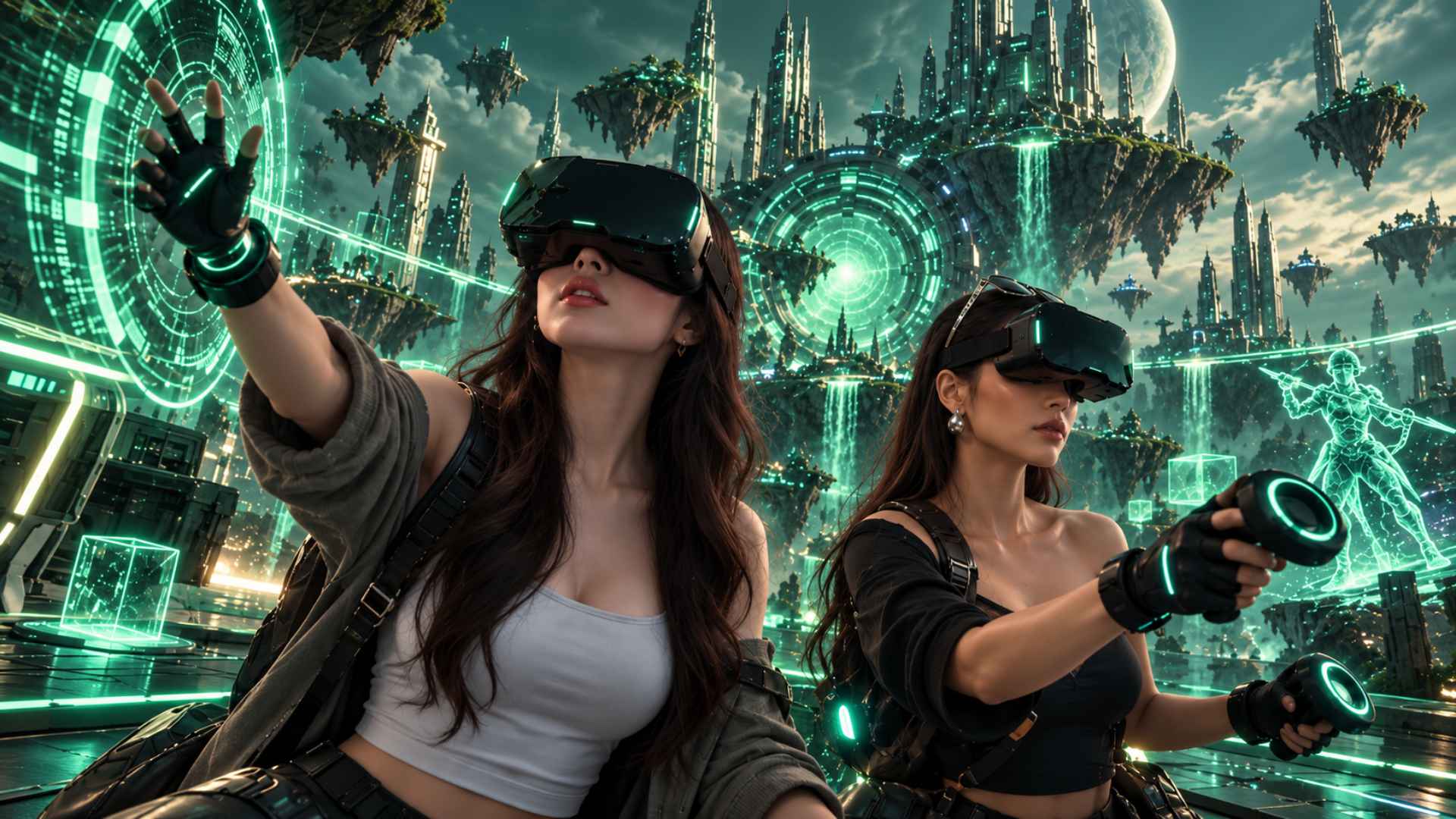
Virtual reality has transformed the gaming industry by creating immersive digital environments where players can interact with virtual objects and experience simulated worlds from a first person perspective. Unlike traditional video games that rely primarily on controllers, keyboards, or touchscreens, virtual reality introduces physical movements as an essential part of gameplay. Players can reach for objects, swing their arms, bend their bodies, and walk within designated spaces to influence what happens on the screen. These capabilities have changed the way developers approach game mechanics, level design, and player engagement. As technology continues to evolve, physical interactions are becoming a defining element of modern virtual reality experiences, encouraging designers to create games that respond naturally to human movement.
The growing importance of physical interaction also introduces new opportunities and challenges for developers. Designing an engaging virtual reality game requires more than creating impressive graphics or realistic sound effects. Developers must understand how players move, perceive distance, maintain balance, and respond to physical feedback. Every interaction needs to feel intuitive while remaining comfortable and accessible for different audiences. When implemented effectively, physical interactions can strengthen immersion, improve emotional engagement, and make virtual environments feel more believable. Understanding their impact is therefore essential for creating successful VR games that combine technological innovation with enjoyable, player centered experiences.
How Physical Interactions Transform Virtual Reality Gameplay
Physical interactions fundamentally change how players communicate with virtual environments. In conventional gaming, a button press might trigger an action such as opening a door, picking up an object, or throwing a weapon. In virtual reality, these actions can require players to reach toward a handle, grip an item, and physically move their hands. This direct approach creates a stronger connection between player intention and in game outcomes. Instead of simply controlling an avatar, players feel as though they are performing actions themselves. This sense of agency can make ordinary gameplay activities more engaging and meaningful, particularly in puzzle games, action adventures, and simulation experiences where manipulating objects is central to progression.
Another important change involves the relationship between physical movement and game mechanics. Developers can incorporate crouching, climbing, aiming, dodging, and throwing into challenges that depend on coordination rather than conventional button combinations. For example, a VR puzzle might require players to rotate a mechanical device with both hands, while a combat game could ask them to block incoming attacks through precise arm movements. These mechanics encourage active participation and create varied gameplay experiences. However, physical interactions should always serve a clear purpose. When movements feel unnecessary, repetitive, or disconnected from the game’s objectives, they can interrupt immersion instead of improving it.
Building Immersion Through Natural Player Movement
Immersion is one of the strongest advantages of physical interaction in virtual reality game design. When virtual objects respond consistently to a player’s movements, the digital environment becomes easier to accept as a believable space. Reaching toward a table, opening a drawer, or picking up a tool can feel more convincing when the action follows familiar real world expectations. Hand tracking, motion controllers, and spatial tracking technologies help developers translate these movements into responsive virtual actions. Accurate object positioning, appropriate movement speed, and convincing interaction animations further strengthen the illusion. Although physical realism does not guarantee an enjoyable game, natural interactions can make virtual experiences more intuitive and emotionally compelling.
Improving Player Engagement and Emotional Connection
Physical interactions can also deepen player engagement by making gameplay feel personal and participatory. Performing an action directly often creates a stronger sense of involvement than selecting an option from a menu. In a VR horror game, slowly reaching for a door handle can increase tension because the player physically participates in the moment. In a rhythm game, coordinated arm movements can create a satisfying connection between music and motion. These experiences encourage players to remain attentive to their surroundings and become invested in immediate challenges. When actions produce clear, consistent feedback, players can better understand their progress and develop confidence in their abilities, strengthening the overall gaming experience.
Motion Tracking and Responsive Interaction Systems
Motion tracking is a foundational technology behind physical interaction in virtual reality. It allows a game to interpret the position and movement of a player’s head, hands, and, in some systems, other parts of the body. Developers use this information to create responsive controls that connect real movements with virtual actions. Modern hand tracking can support gestures without requiring dedicated controllers, while motion controllers provide physical buttons, grip detection, and vibration feedback. Choosing the right interaction system depends on the game’s objectives, technical requirements, and intended audience. Reliable tracking is especially important because noticeable delays, inaccurate positioning, or inconsistent gestures can weaken immersion and make interactions frustrating.
Haptic Feedback and the Sense of Touch
Haptic feedback adds another dimension to physical interaction by communicating sensations through vibrations or other tactile signals. When a player fires a weapon, touches a virtual surface, or receives an impact, controller vibrations can reinforce the corresponding event. This feedback helps distinguish different actions and gives players additional information about what is happening in the virtual environment. Advanced haptic technologies may also simulate more detailed sensations, although their capabilities vary across devices. Designers should use tactile feedback selectively so that it remains meaningful rather than distracting. Well timed haptic responses can improve immersion, communicate important gameplay events, and make virtual interactions feel more substantial without relying exclusively on visual or audio cues.
Comfort, Accessibility, and Physical Limitations
Successful VR game design must account for differences in players’ physical abilities, available space, and tolerance for movement. Requiring constant standing, rapid turning, or extensive reaching may exclude players who experience mobility limitations or fatigue. Excessive movement can also create discomfort, particularly when physical actions conflict with artificial movement inside the virtual world. Developers can address these concerns through seated modes, adjustable movement settings, customizable controls, and alternative interaction methods. Clear boundaries and adjustable difficulty can further improve usability. By offering flexible ways to complete objectives, designers can preserve the benefits of physical interaction while making virtual reality games more welcoming, comfortable, and accessible to a broader audience.
Balancing Physical Realism With Enjoyable Gameplay
Although realistic physical interactions can strengthen immersion, realism should not become the only objective of virtual reality game design. Reproducing every real world movement may introduce unnecessary complexity, slow down progression, or exhaust players during longer sessions. For instance, requiring a player to perform an elaborate sequence of movements to open a simple container may feel impressive initially but frustrating after repeated use. Designers need to identify which actions benefit from realistic movement and which are better handled through simplified controls. This balance helps maintain a natural experience without sacrificing pacing, convenience, or enjoyment. Effective VR mechanics make interactions feel believable while keeping the primary gameplay objectives clear and accessible.
Looking ahead, improvements in artificial intelligence, full body tracking, wearable haptics, and spatial computing are likely to expand the possibilities for physical interaction. These technologies may enable virtual characters to respond more naturally to gestures, environments to adapt to player behavior, and objects to provide richer sensory feedback. Nevertheless, technological sophistication alone will not determine whether a VR game succeeds. Developers must continue testing their designs with real players, evaluating comfort, responsiveness, accessibility, and entertainment value. Ultimately, the impact of physical interactions on virtual reality game design lies in their ability to connect human movement with meaningful digital experiences. By combining intuitive controls, thoughtful feedback, and player centered design, developers can create VR games that feel immersive, engaging, and enjoyable.