
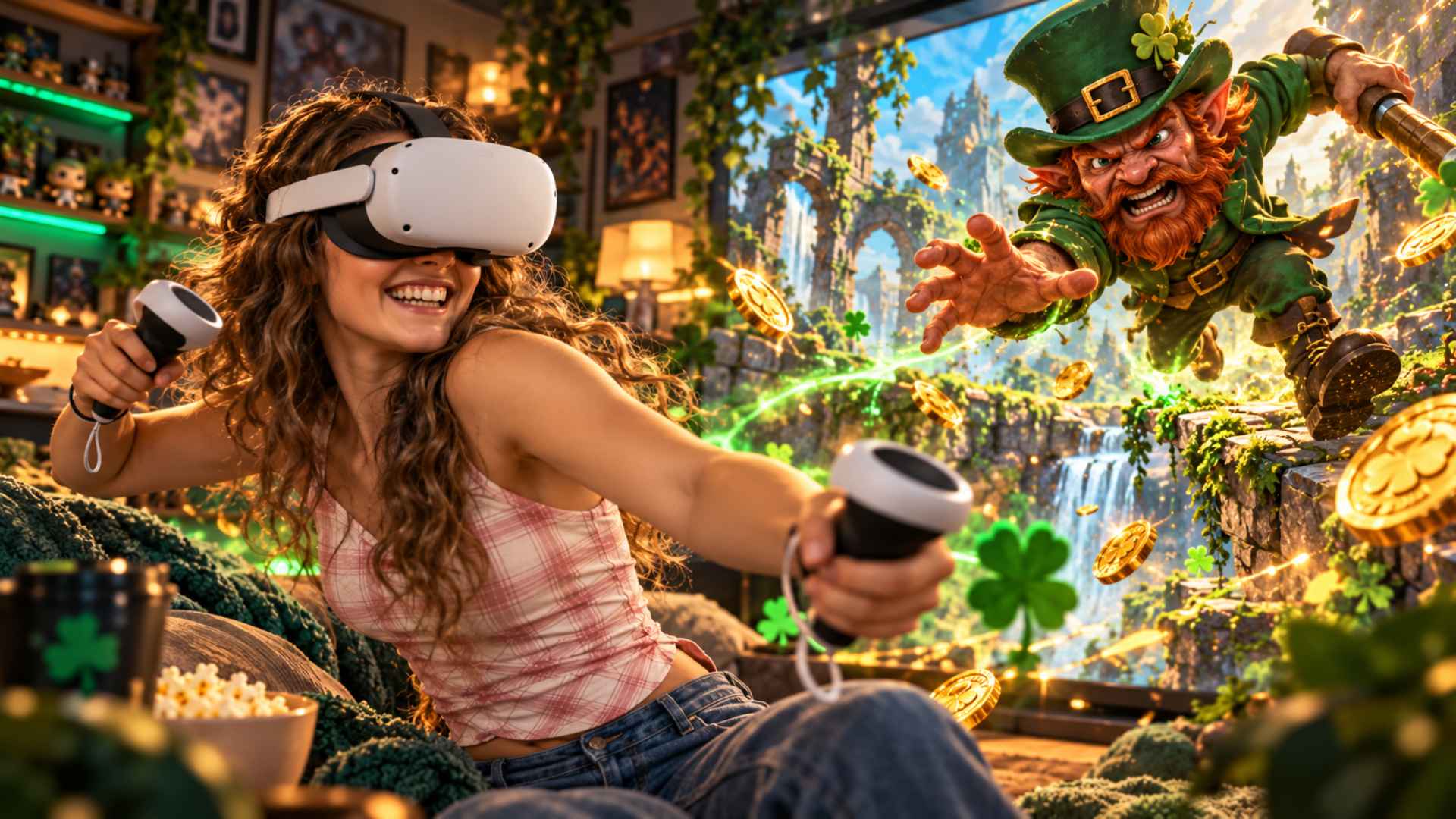
Physics based virtual reality games offer a form of interaction that differs significantly from conventional screen based gameplay. Instead of relying entirely on predefined button commands, these games can translate tracked physical movements into actions inside a simulated environment. Players may manipulate objects, handle virtual tools, or interact with characters through motion sensitive controls. The outcome depends on the game’s physics simulation, collision rules, and interaction design rather than visual presentation alone. This combination creates opportunities for experimentation that are less common in games built primarily around fixed animation sequences.
The difference becomes especially noticeable when players encounter objects that respond dynamically to their movements. A virtual item might roll after a collision, fall when released, or interact with another object according to simulated physical properties. These responses can make familiar gaming actions feel less predictable because the player’s movement influences the result. However, realistic looking interactions do not necessarily indicate that a game reproduces real world physics accurately. Developers frequently adjust simulated behavior to balance performance, responsiveness, and the intended gameplay experience.
The Building Blocks Of Physics Based VR Interaction
Physics based interaction depends on several connected systems working together inside a game engine. Collision detection determines when simulated objects make contact, while rigid body systems can calculate movement based on forces and other physical properties. Developers may also use joints and constraints to control how connected objects behave. These techniques make it possible to simulate actions such as lifting, throwing, pushing, and manipulating virtual equipment. The precise results vary because individual games use different physics settings, object properties, and interaction rules.
Motion tracking introduces another layer of complexity by connecting a player’s real movements to the game’s virtual representation. A headset typically supplies information about head position and orientation, while supported controllers provide additional input for interacting with the environment. Developers must decide how virtual hands respond when a physical controller moves through a simulated solid object. Some games restrict the virtual hand, while others use alternative interaction methods to maintain responsiveness. These design choices affect whether an experience emphasizes physical consistency, ease of use, or fast paced gameplay.
Why Player Movement Changes Game Design
Traditional games commonly represent complex actions through button presses that trigger animations or scripted behavior. In a physics based VR environment, the direction, timing, and position of a player’s movements can become important gameplay variables. Reaching for an object requires a different interaction model from pressing a button while standing nearby. Developers therefore need to consider object placement, interaction distance, body representation, and the relationship between tracked devices and virtual actions. These factors influence level layouts and the types of challenges that function effectively in virtual reality.
Movement based interaction also changes how players learn a game’s mechanics. Instead of memorizing only control combinations, players may develop familiarity with how simulated objects respond to repeated actions. A thrown object can behave differently depending on its release direction, virtual mass, and the game’s movement calculations. This creates opportunities for experimentation, but it can also introduce inconsistencies when tracking or physics systems behave unexpectedly. Clear feedback is essential because players need to recognize whether an action failed due to game rules, technical limitations, or their own movement.
Sandbox VR Games And Emergent Gameplay
Sandbox games provide environments where players can experiment with available systems rather than follow one strictly defined sequence of activities. Physics simulations can make these environments particularly flexible by allowing objects to interact in multiple ways. A single collection of tools, movable objects, and environmental obstacles may support several approaches to the same activity. The resulting situations are often described as emergent gameplay because they arise from interactions between systems rather than from individually scripted events. This does not mean every possible action is supported, since each sandbox operates within its own technical and design boundaries.
BONELAB and Blade & Sorcery are useful examples of VR games that emphasize physical interaction, although their gameplay structures and mechanics differ. BONELAB incorporates experimental environments and physics oriented interaction as important parts of its design. Blade & Sorcery places substantial emphasis on melee combat, weapon handling, and the simulation of physical encounters. Both demonstrate how player movement can influence events in ways that differ from conventional animation driven combat systems. Their approaches also show that physics based VR is not a single genre with one standard set of mechanics.
Combat Mechanics And Object Handling
Combat presents a demanding application of simulated physics because weapons, characters, and environmental objects may interact within a short period. A melee weapon can be represented as a tracked object whose movement contributes to collision detection and simulated contact. Depending on the game’s implementation, impact behavior may consider factors such as movement speed, collision direction, or predefined damage rules. These calculations are usually simplified or adjusted because fully realistic physical simulation is not always practical or desirable for gameplay. The result is a system designed to create responsive interactions within the limits of the engine and available hardware.
Object handling introduces similar challenges outside combat scenarios. Players expect virtual items to respond promptly when grabbed, moved, released, or placed on surfaces. Developers must manage the relationship between tracked controller movement and simulated object behavior, especially when collisions or constraints interfere with motion. Objects with unusual shapes or multiple interaction points may require specialized handling systems. These details influence whether manipulating the environment feels consistent and whether players can predict the results of their actions.
The Role Of Mods And User Created Content
Community created modifications are an established part of gaming culture and can play an important role in supported VR titles. Modifications may introduce alternative objects, custom environments, visual changes, or adjustments to gameplay mechanics. Their scope depends on the tools provided by developers and the technical structure of the game. Some communities have access to official software development kits, while others depend on different forms of authorized customization. As a result, modding capabilities vary considerably between titles and platforms.
Compatibility is one of the most important considerations when installing third party content. A modification designed for one game release may not function correctly after the underlying software changes. Installation methods can also differ between standalone VR versions and PC based releases, even when a game is available on both platforms. Players should examine version requirements, installation guidance, and the reliability of software distribution sources before making changes. Keeping suitable backups and avoiding untrusted executable files can reduce the risk of corrupted installations or security problems.
Comfort, Tracking, And Technical Performance
Comfort is an essential part of VR game design because visual motion and physical movement do not always correspond perfectly. Artificial movement through a virtual environment can produce discomfort for some players, particularly when the displayed motion differs from signals received by the body’s balance system. Developers may provide alternative navigation methods, including teleportation, snap turning, or adjustable movement speed. These settings can make games more comfortable for certain users, although no single option works equally well for everyone. Individual sensitivity, session duration, and the design of the virtual environment all influence the experience.
Technical performance also affects the quality of physics based interaction. Simulated objects and characters require computational resources, and complex environments can increase the workload on a game system. When too many demanding calculations occur simultaneously, frame delivery or simulation responsiveness may become inconsistent. Tracking quality, display performance, and software optimization therefore contribute to the overall experience alongside visual detail. A suitable play area and awareness of nearby physical obstacles remain important even when the virtual environment appears spacious.
The Value Of Physics Based Design For Indie Developers
Independent developers can use physics based mechanics to create distinctive gameplay experiences without depending entirely on large amounts of scripted content. A carefully designed interaction system may support different challenges, experiments, and player generated situations within the same environment. This approach can encourage replayability when the underlying mechanics offer meaningful variation. However, implementing reliable physics interactions still requires substantial design, testing, and technical expertise. Smaller development teams must consider the tradeoffs between simulation complexity, visual presentation, content scope, and available resources.
The broader importance of physics based VR lies in the design possibilities it creates rather than in any guarantee of realism or commercial success. Interactive objects, player directed movement, and responsive environments can support forms of gameplay that differ from conventional control systems. At the same time, good game design requires clear feedback, accessible options, stable performance, and mechanics appropriate to the intended audience. Physics simulation is most useful when it contributes meaningfully to the experience instead of adding unnecessary technical complexity. As developers continue experimenting with immersive interaction, these design principles remain relevant to the development and evaluation of VR games.