
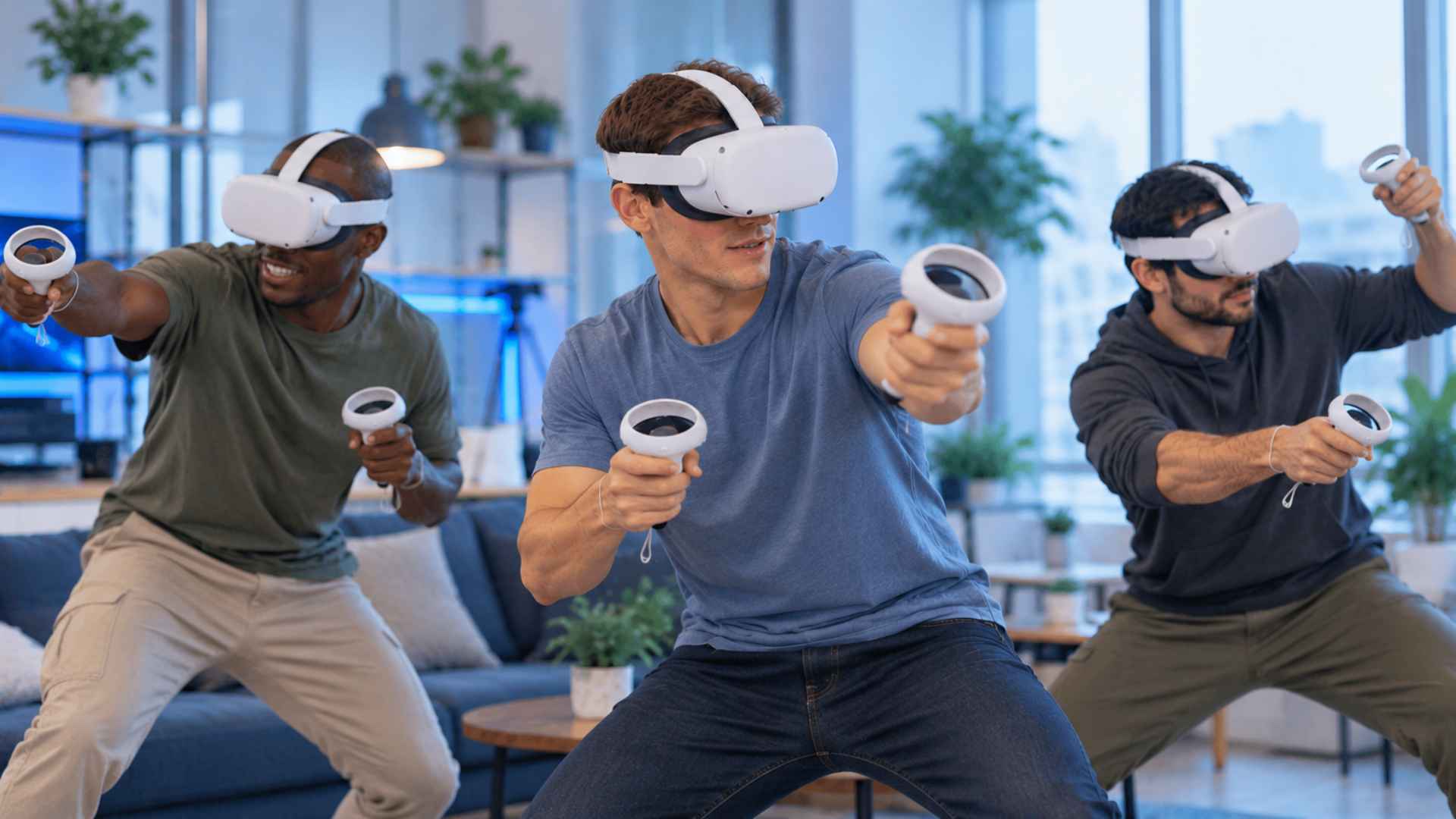
Virtual reality has changed the way players interact with digital environments by making gaming feel more physical, responsive, and personal. Instead of controlling a character through a screen, players can move their bodies, reach for objects, and interact with virtual surroundings using natural gestures. These experiences become even more convincing when developers apply realistic physics to every interaction. From picking up a glass to pushing a heavy door, small details can make a virtual world feel remarkably close to reality. As VR technology continues to advance, realistic movement and believable object behavior are becoming essential elements of modern interactive entertainment.
One of the most important factors behind this transformation is the relationship between physical accuracy and player immersion. In physics based virtual reality games, objects respond to movement, gravity, force, and collisions according to simulated physical rules. This creates a more consistent environment where actions produce understandable consequences. When players see objects fall naturally, feel resistance through compatible controllers, or watch materials react differently to impacts, they can develop a stronger connection with the virtual space. These experiences demonstrate how carefully designed physics can turn ordinary gameplay into an engaging experience that feels intuitive, believable, and emotionally rewarding.
How Realistic Physics Strengthens Virtual Reality Immersion
Immersion depends on how effectively a virtual environment convinces players that they are participating in another world. Visual quality and sound design contribute significantly, but interactions often determine whether that illusion remains convincing. In physics based virtual reality games, objects must behave in ways that match the player’s expectations. A wooden box should fall when released, a ball should bounce according to its material, and a loose object should respond when pushed across a surface. When these actions produce predictable results, players can interact without constantly questioning the logic of the environment. This consistency supports a natural sense of presence, allowing attention to shift away from the technology and toward the experience itself.
Realistic physics also encourages experimentation because players can understand the consequences of their actions. Instead of following predetermined animations, they can manipulate objects, test different approaches, and solve challenges through physical interaction. A puzzle might require balancing several objects, redirecting a moving platform, or applying the right amount of force to activate a mechanism. These tasks feel more personal because the solution emerges from the player’s decisions and movements. By combining freedom with consistent physical rules, developers create environments that reward curiosity and problem solving while making each successful interaction feel earned rather than scripted.
The Role of Motion Tracking and Natural Player Movement
Accurate motion tracking connects the player’s physical movements with their virtual representation. When headsets and controllers capture hand positions, body orientation, and gestures with minimal delay, interactions become easier to understand and control. Players can reach toward objects, bend to inspect details, or turn their heads to follow movement without experiencing a noticeable disconnect between their intentions and the virtual response. This synchronization strengthens immersion because the body becomes an active part of the experience rather than a passive input device. Reliable tracking also helps players develop confidence, particularly in environments that require precise movements or coordination between both hands.
Building Believable Objects Through Physical Simulation
Object behavior plays an equally important role in creating convincing virtual environments. Developers use simulated gravity, friction, mass, momentum, and collision detection to determine how objects move and interact. These properties help distinguish a lightweight paper cup from a heavy metal tool, even when both objects are controlled using the same virtual hands. Material properties can also influence sound, deformation, and resistance, creating additional cues that reinforce physical realism. However, realism does not always require perfect scientific accuracy. A carefully balanced simulation that feels consistent and responsive can provide a more enjoyable experience than an extremely complex system that makes simple actions difficult.
Creating Natural Hand Interactions With Virtual Objects
Hand interaction is one of the most noticeable elements of physics based virtual reality games because players frequently use their hands to manipulate the environment. Grabbing, lifting, throwing, rotating, and releasing objects should feel predictable enough to support natural movement. Developers can improve these interactions by accounting for grip positions, object weight, hand collisions, and the transition between holding and releasing an item. When a virtual hand appears to pass through a solid object or a held tool moves unexpectedly, the illusion can quickly weaken. By contrast, responsive grabbing systems allow players to focus on their goals instead of struggling with the controls. Subtle details, such as adjusting an object’s orientation during a grip, can make interactions feel considerably more authentic.
Using Gravity and Collisions to Create Dynamic Gameplay
Gravity and collision systems transform virtual environments into spaces where actions can produce changing outcomes. A stack of boxes may collapse when struck, a dropped tool may roll down an inclined surface, and a moving object may transfer momentum to another object after impact. These interactions create opportunities for emergent gameplay, where players encounter situations that developers did not need to script individually. Dynamic physical responses can also increase replay value because small differences in timing, force, or positioning may lead to different results. To preserve immersion, however, collisions must remain stable and believable. Objects that unexpectedly shake, penetrate surfaces, or accelerate without explanation can undermine the experience, making reliable simulation just as important as visual detail.
Balancing Physical Accuracy With Comfort and Performance
Although realistic simulation can improve immersion, excessive complexity may create technical and usability challenges. Virtual reality applications must maintain smooth performance because unstable frame rates and delayed responses can cause discomfort or motion sickness. Detailed physics calculations also consume processing resources that could otherwise support higher visual quality, more complex environments, or additional interactive objects. Developers therefore need to prioritize the interactions that matter most to gameplay. A simulation may use highly detailed calculations for objects players handle frequently while simplifying the behavior of distant or decorative elements. Comfort features, accessible controls, and forgiving interaction systems can further improve the experience, ensuring that realism enhances enjoyment instead of creating unnecessary frustration.
The Future of Realistic Physics in Virtual Reality Gaming
The future of immersive gaming will likely depend on how effectively developers combine physical simulation with advances in hardware and interaction design. More accurate hand tracking, improved haptic feedback, and responsive environmental systems can help players perceive virtual actions through multiple sensory cues. Haptic devices may simulate resistance or vibration when players touch surfaces, while more sophisticated software can support complex object interactions and environmental reactions. Artificial intelligence may also help virtual characters respond more naturally to physical actions, making encounters feel less predictable and more contextually appropriate. Together, these technologies could create virtual spaces where movement, touch, and cause and effect feel increasingly connected.
Despite these opportunities, realism should remain a tool for better gameplay rather than an objective that overrides every other design consideration. Some experiences benefit from accurate weight and momentum, while others become more enjoyable when physical rules are simplified to support fast movement or creative problem solving. Successful developers understand the expectations of their audience and design interactions that balance authenticity, accessibility, and performance. As physics engines and VR hardware continue to improve, believable physical behavior will remain a major factor in creating memorable experiences. Ultimately, the strongest virtual reality games will be those that make players feel present in their environments while giving them meaningful freedom to interact, experiment, and shape the world around them.