
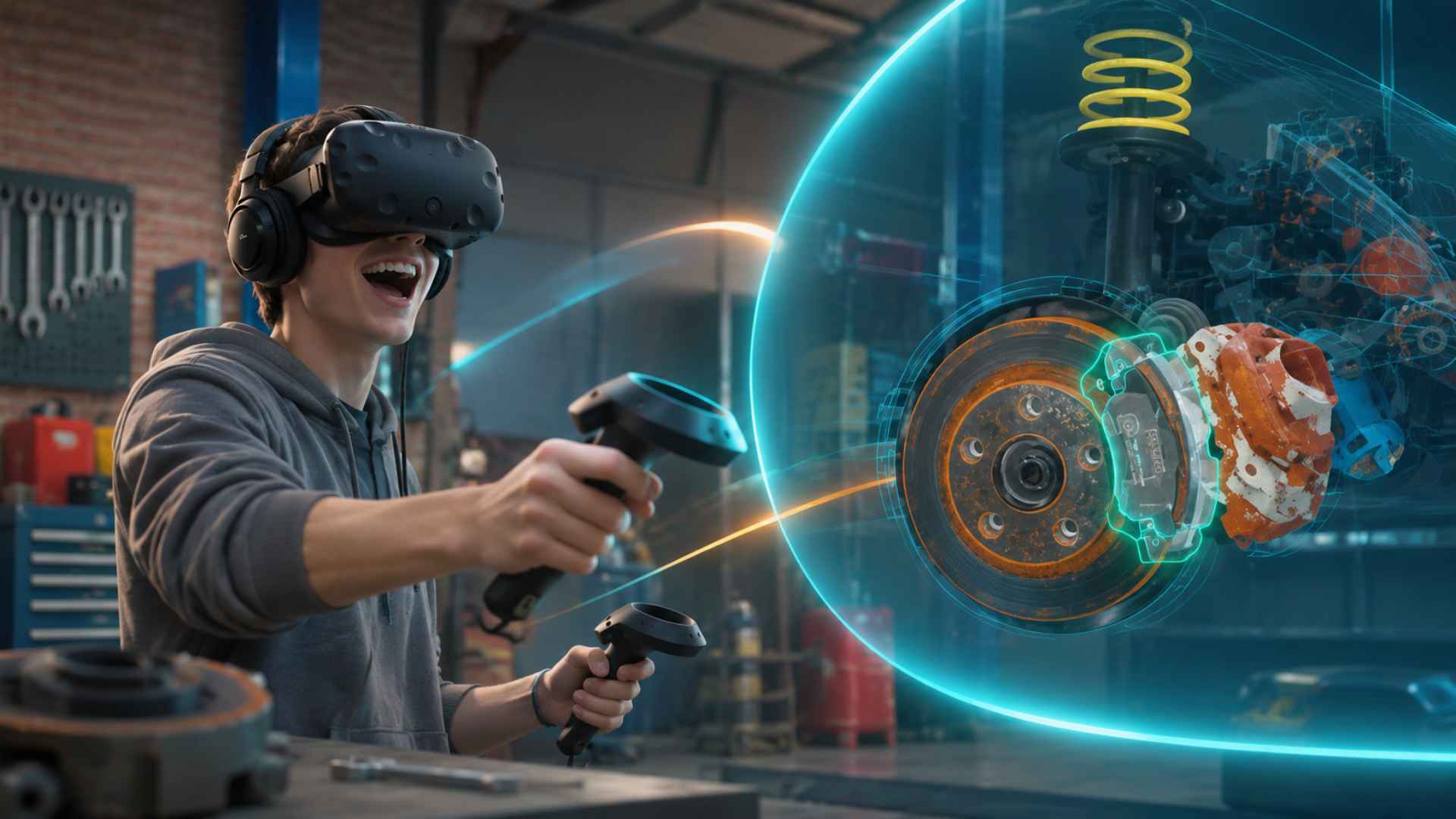
Virtual reality is changing the way people interact with digital environments. Instead of simply watching a screen, players can step into virtual spaces, move around, and interact with objects as if they were part of the real world. This experience is made possible through VR game mechanics that connect physical movements with digital actions.
As VR technology continues to grow, game developers are finding new ways to make virtual experiences feel more natural and engaging. By combining real world movements, interactive objects, and immersive environments, VR games are creating stronger connections between the physical and virtual worlds.
How VR Game Mechanics Connect Real And Virtual Experiences
VR game mechanics play an important role in making virtual environments feel realistic. Features such as motion tracking, hand gestures, and body movement allow players to control what happens inside a game using their own physical actions. For example, reaching out to grab an object or turning the head to look around can instantly affect the virtual environment.
This connection makes gameplay feel more personal because players are no longer limited to traditional controllers or keyboard inputs. Their bodies become part of the gaming experience, creating a more direct relationship between real world actions and digital responses. As a result, VR games can offer a deeper sense of involvement and immersion.
The Role Of Physical Interaction In Immersive VR Games
Physical interaction helps make VR games more exciting and believable. When players can walk, reach, grab, throw, or point at objects, the virtual world becomes easier to understand and interact with. These simple actions create a familiar experience because they are based on movements people already use in everyday life.
Another important element is realistic feedback. Sound effects, visual responses, and controller vibrations can make virtual interactions feel more satisfying. When these features work together, players can feel more connected to the environment. Good VR game mechanics focus on making every movement feel smooth, responsive, and meaningful.
Motion Tracking Creates More Natural Gameplay
Motion tracking allows VR systems to follow a player’s movements and translate them into actions inside the game. Head tracking, hand tracking, and body tracking help create a more natural experience. Players can look around, move their hands, and interact with virtual objects without feeling restricted by traditional gaming controls.
Hand Gestures Make Virtual Interactions More Realistic
Hand gesture controls allow players to use natural movements instead of pressing multiple buttons. They can pick up objects, open doors, point at targets, or perform other actions using their hands. This makes VR gameplay easier to understand while helping players feel more connected to the virtual environment.
Spatial Audio Strengthens The Feeling Of Presence
Spatial audio adds another layer of realism by making sounds appear to come from specific directions and distances. Players can hear footsteps behind them, voices nearby, or environmental sounds coming from different areas. These audio details help create a stronger sense of space and make virtual environments feel more alive.
Practical Applications Of VR Mechanics Beyond Traditional Gaming
VR game mechanics are not limited to entertainment. Many industries are using similar interactive features to create useful digital experiences. In education, students can interact with virtual objects and experience situations that may be difficult to recreate in a classroom. In training, workers can practice tasks in simulated environments without facing the risks of real world mistakes.
These applications show how VR can connect physical actions with digital learning and real world skills. As technology becomes more accessible, VR experiences may become a bigger part of everyday activities. The combination of movement, interaction, and realistic feedback will continue to shape how people use virtual environments for gaming, learning, and professional training.